I found an old Griswold at an estate sale last month with heavy surface rust, no visible cracks, smooth original machined surface underneath. I took it home, and did the electrolysis bath, re-seasoned four times and it's now one of my best pieces. The rule I use is: surface rust is never a reason to walk away and pitting is where you have to decide. Light pitting you can usually cook through, it'll fill in over time. Deep pitting and structural damage is a different story. What condition do you use as your walk-away point?

You are using an out of date browser. It may not display this or other websites correctly.
You should upgrade or use an alternative browser.
You should upgrade or use an alternative browser.
Restoring a badly rusted piece from a thrift store
- Thread starter Bane
- Start date


MaisonF
Active member
- Joined
- Jun 16, 2026
- Messages
- 31
I have a hard time getting myself to use anything with a crack or a spin (severe warp). Though sometimes you just can't see cracks underneath the crust, so you take that risk and factor that into the cost when you purchase. Warping is easier to spot and after buying a large number of warped Wagners I have become very skeptical of anything without a heat ring.
Rust and pitting I am much more forgiving with. Not sure why, but some light pitting on the cooking surface really doesn't turn me off as long as the price reflects the condition. Any rust on the exterior is only cosmetic, and I've bought a few pieces with pretty moderate to severe exterior rust to clean them up due to the interior looking great.
Here is a hammered lodge #9 skillet interior that looked like surface rust, but was hiding some pretty serious pitting. I'm using this one quite regularly, but if it was warped or cracked, it would probably be re-gifted or traded.
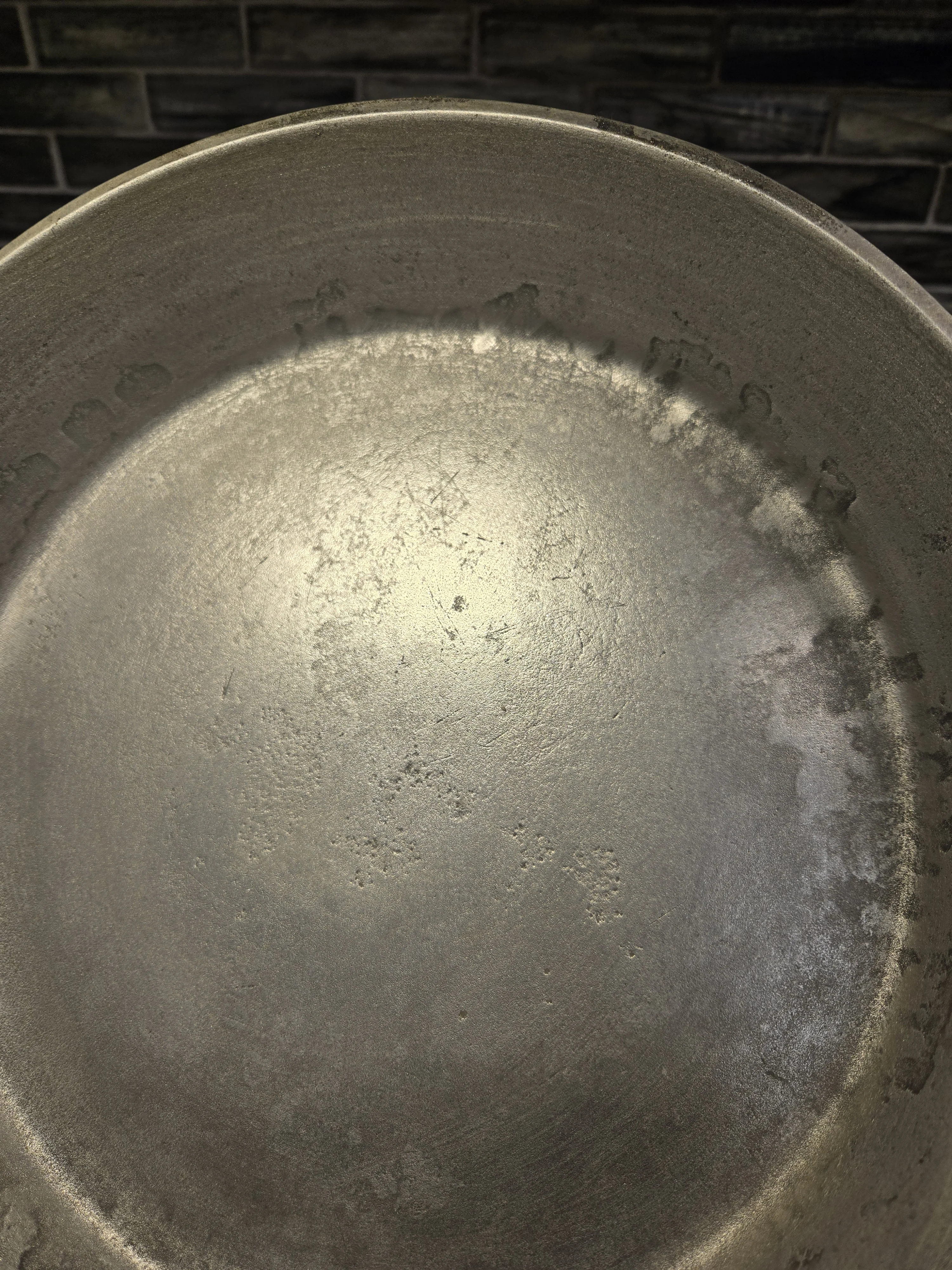
Rust and pitting I am much more forgiving with. Not sure why, but some light pitting on the cooking surface really doesn't turn me off as long as the price reflects the condition. Any rust on the exterior is only cosmetic, and I've bought a few pieces with pretty moderate to severe exterior rust to clean them up due to the interior looking great.
Here is a hammered lodge #9 skillet interior that looked like surface rust, but was hiding some pretty serious pitting. I'm using this one quite regularly, but if it was warped or cracked, it would probably be re-gifted or traded.